 +86 13717134343





- Home
- Products
- Solutions
- About Us
- Support
-
 CONTACT PDS+86 13717134343
-
 CONTACT PDS
-
 CONTACT PDS

Honestly, choosing Smart Agriculture Technology isn’t just about grabbing the newest sensor, drone, or software platform. If you’re buying globally, you need proof that a solution actually works in real fields—across different climates, labor setups, and spotty connectivity. The FAO says agriculture uses more than 70% of the world’s freshwater withdrawals. That makes irrigation efficiency a practical necessity, not just a nice marketing line. And in The State of Food and Agriculture 2022, the FAO also points out that automation can boost productivity—but unequal access can leave smaller farms behind.
So where should you start? With problems you can measure. Can the system cut water use, spot crop stress, or make yields more consistent? Ask for field trial data. Ask about installation needs, cybersecurity policies, and total ownership costs. The World Bank has said it again and again: digital agriculture depends on reliable connectivity, usable data, and supportive institutions. A cloud platform can look great in a demo, sure. But it might fall apart when the signal drops between greenhouse blocks. That kind of detail really matters.
Interoperability is another thing to watch closely. Devices should share data through documented standards, not just create yet another isolated system. John Deere, Trimble, and Microsoft are useful examples of connected agricultural ecosystems, but no vendor fits every region. A smaller provider might offer better local support. A bigger one might bring stronger integration and financing. Neither is automatically the safer pick.
No shortlist is ever perfect. Start with a limited pilot. Define what success looks like. And talk to farmers who actually use the equipment. Practical proof beats polished promises every time. The best choice balances agronomic value, ease of operation, data responsibility, and long-term support.
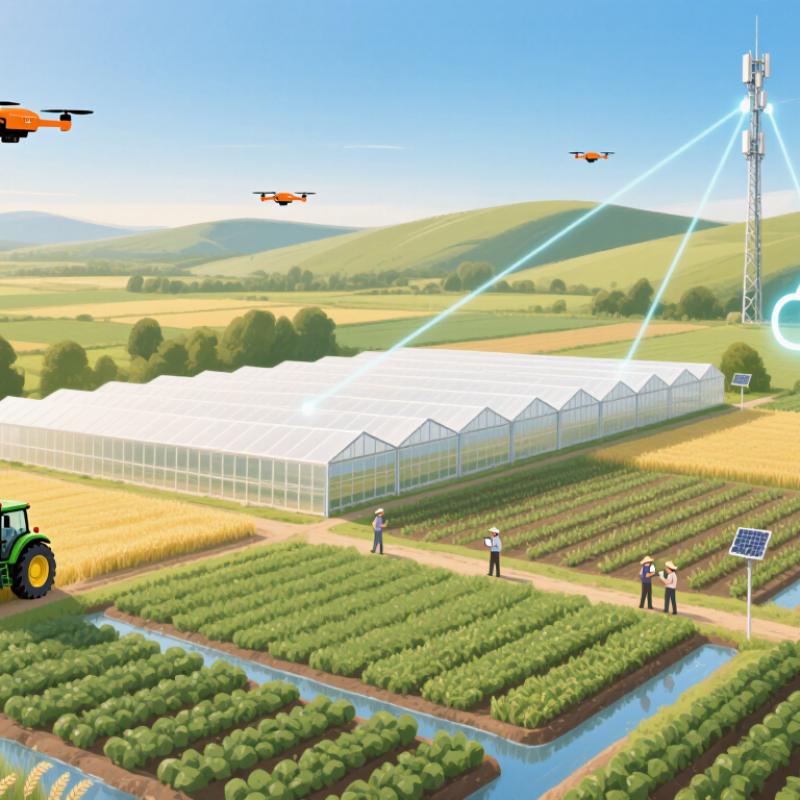
Frame the Need: Feed 9.7 Billion People by 2050 (UN, 2022)
How to Choose Smart Agriculture Tech for Global Buyers?
The UN World Population Prospects 2022 projects 9.7 billion people by 2050. Agriculture must produce more food with fewer dependable resources. FAO data estimates that farming uses about 70% of global freshwater withdrawals. A dry field, rising input prices, and labor shortages make technology selection urgent. Smart Agri Technology can help, but it cannot repair poor farm planning. Buyers should examine soil conditions, crop cycles, connectivity, and local skills before comparing features.
Look for measurable results, not impressive dashboards. A useful system may track soil moisture, detect irrigation leaks, or forecast disease risks. The International Telecommunication Union reports that billions of people still lack reliable internet access. Therefore, offline functions and low-bandwidth data sharing matter in rural markets. Check sensor accuracy, data ownership, cybersecurity controls, and compatibility with existing equipment. A small pilot is safer than a nationwide purchase, although pilots can fail because of weak training or unsuitable field design.
Tips: Start with one costly problem. Record water use, yield, labor hours, and maintenance costs before deployment. Ask suppliers for independent test results and local service records. Calculate payback under poor harvest conditions, not only ideal seasons. Leave room for human judgment; farmers may notice field changes before an algorithm does. No solution fits every farm.
How to Choose Smart Agriculture Tech for Global Buyers?
Frame the Need: Feed 9.7 Billion People by 2050
A global-buyer framework for evaluating smart agriculture technologies against food-demand, resource-efficiency, climate-resilience, and implementation requirements.
| Decision Dimension | Verified Global Data Point | Why It Matters to Buyers | Relevant Technology Category | Suggested Evaluation Metric | Primary Source |
|---|---|---|---|---|---|
| Future Food Demand | The world’s population is projected to reach approximately 9.7 billion by 2050. | Technology should increase productivity and reduce avoidable losses without requiring proportional expansion of farmland. | Farm-management software, decision-support systems, yield forecasting, digital advisory tools | Yield per hectare; output per unit of labor; adoption rate among target farmers | United Nations, World Population Prospects 2022 |
| Water Efficiency | Agriculture accounts for approximately 70% of global freshwater withdrawals. | Water-saving solutions are especially important in water-stressed regions and for high-value crops. | Soil-moisture sensors, weather stations, automated irrigation, satellite-based crop monitoring | Water used per kilogram of crop; irrigation volume per hectare; water productivity | FAO AQUASTAT |
| Food Loss Before Retail | Approximately 13.2% of food is lost globally between harvest and retail, according to the latest FAO estimate. | Buyers need solutions that protect food quality during harvesting, storage, handling, and transport. | Cold-chain monitoring, storage sensors, digital traceability, quality inspection, logistics analytics | Loss percentage by supply-chain stage; shelf-life extension; temperature-excursion rate | FAO, Food Loss and Waste Data |
| Food Waste at Retail and Consumption | In 2022, an estimated 1.05 billion tonnes of food waste were generated at retail, food-service, and household levels. | Technology selection should cover demand forecasting, inventory visibility, portion management, and redistribution workflows. | AI demand forecasting, inventory platforms, digital marketplaces, smart labeling | Food waste per sales unit; forecast accuracy; inventory turnover; markdown reduction | UNEP, Food Waste Index Report 2024 |
| Climate Exposure | The IPCC reports that climate change has already reduced agricultural productivity growth globally over recent decades. | Global buyers should prioritize technologies that help farms anticipate heat, drought, floods, pests, and changing growing seasons. | Climate-risk analytics, early-warning systems, remote sensing, crop and pest models | Yield stability across seasons; warning lead time; avoided crop-loss value | IPCC, Sixth Assessment Report, Working Group II |
| Fertilizer and Input Efficiency | Nitrogen-use efficiency varies substantially by crop, location, management practice, and climate; universal input rates are therefore unsuitable. | Buyers should look for site-specific recommendations rather than simply increasing input volume. | Variable-rate application, field mapping, nutrient sensors, crop scouting, prescription software | Crop output per unit of nutrient; input cost per hectare; nutrient balance; emissions intensity | FAO, Sustainable Crop Production Intensification |
| Smallholder Accessibility | Small farms remain a major part of global food production, but farm-size estimates differ by definition and data source. | Products must work with limited connectivity, low capital availability, local languages, and different levels of digital literacy. | Mobile advisory services, offline-first applications, shared equipment, pay-per-use platforms | Total cost of ownership; offline functionality; training hours; payback period | FAO, The State of Food and Agriculture 2018 |
| Connectivity and Data Readiness | Agricultural operating environments frequently include rural areas with intermittent electricity, limited broadband, and fragmented data systems. | A technically advanced product may fail if it cannot operate reliably under local infrastructure conditions. | Low-power IoT, edge computing, satellite connectivity, interoperable data platforms | Device uptime; battery life; data synchronization success; integration time; cybersecurity controls | International Telecommunication Union, Facts and Figures |
| Labor and Operational Efficiency | Agriculture remains highly dependent on labor availability, while many regions face seasonal labor shortages and rising operating costs. | Automation should be assessed by measurable productivity gains, not by equipment novelty alone. | Robotics, machine guidance, automated sorting, workflow management, teleoperation | Labor hours per hectare; task completion time; machine utilization; maintenance cost | FAOSTAT, Employment Indicators |
| Investment and Scalability | Technology value depends on crop type, farm scale, local labor costs, water availability, infrastructure, and market access; no single payback period applies globally. | Buyers should compare solutions using a location-specific business case and a controlled pilot before large-scale deployment. | Modular platforms, subscription models, equipment leasing, cooperative deployment, API-based systems | Total cost of ownership; return on investment; payback period; scale-up cost per hectare | FAO, Digital Agriculture |
Vehicle Tablet T10 Pro: Rugged High-Brightness Performance for Agriculture, Mining, and Logistics
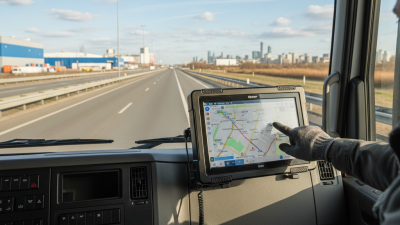
Outdoor industries increasingly depend on connected, vehicle-mounted computing. A 2024 MarketsandMarkets forecast estimates that the global rugged tablet market will expand significantly through 2028, driven by demand for real-time data in logistics, construction, agriculture, and field service. The T10 Pro Vehicle Tablet addresses this need with a 10.1-inch, 1280×800 high-brightness IPS display, wide 170-degree viewing angles, and responsive multi-touch operation, helping drivers and operators read maps, machine data, and work orders in direct sunlight.
Built for demanding vehicle environments, the tablet combines an 8-core 2.0GHz processor, 4GB memory, 64GB storage, and external expansion up to 512GB. Global 4G LTE, dual-band Wi-Fi, Bluetooth 5, and GPS plus BeiDou positioning support continuous communication and centimeter-level RTK applications. Its dual CAN networks and capacity for up to four 720P cameras also enable fleet monitoring, equipment diagnostics, and operational visibility. The World Bank’s 2023 Logistics Performance Index highlights tracking and shipment visibility as important factors in supply-chain efficiency, making these integrated connectivity features especially valuable for modern fleets.
A Rugged Pc enclosure, IP66 protection, 9–36V input, ISO7637-II compliance, and MIL-STD-810 vibration resistance allow reliable deployment across farms, mines, warehouses, public transport, and manufacturing sites. Custom rear I/O configurations and an open SDK further support specialized vehicle systems without compromising sunlight readability or field durability.

FAQS
Walk through the property with a signal meter. Test near pumps, storage buildings, hills, and low valleys. Record signal strength, latency, packet loss, and recovery time. Desktop coverage maps can mislead. A green map is not proof.
LPWAN can connect soil moisture and temperature sensors with low energy use. Its range may shrink behind thick walls, hills, or seasonal vegetation. A raised gateway may improve reception. Solar power and local storage can help. The battery still matters.
Start with a small field trial. Place sensors at different distances. Compare readings after rain, heat, and power interruptions. Test local storage when the network disappears. One successful week proves very little.
Satellite or cellular backup can improve resilience. It also adds equipment, maintenance, and operating costs. Choose backup only for important workflows. I would not promise perfect coverage. Conditions change.
Ask suppliers to exchange data during a field trial. Test mixed tractors, implements, and farm software. Use shared formats, stable identifiers, timestamps, and measurement units. Check whether records remain usable after equipment changes. A polished brochure is not enough.
Request documented APIs with export and migration support. A soil reading should include location, depth, units, and calibration status. Audit logs should show important changes. Permission controls must be clear. Precise dashboards can still hide weak measurements.
Collect only information required for a clear purpose. Explain data use to workers and operators. Use role-based access and simple privacy notices. Encrypt data during transfer and storage. An irrigation controller may reveal crop cycles and work schedules.
Ask where data is stored, who can access it, and how incidents are reported. Set retention limits before deployment. Delete old machine logs without a valid business reason. Review permissions every quarter. Perfect compliance is difficult. Document uncertain decisions instead of hiding them.
Conclusion
Choosing Smart Agriculture Technology requires a practical, long-term approach rather than focusing only on advanced features. With the global population expected to reach 9.7 billion by 2050, agricultural systems must improve productivity while using resources more efficiently. Since farming accounts for about 70% of global water withdrawals, buyers should prioritize solutions that reduce water use and support precise irrigation. Investment decisions should compare expected yield improvements, input savings, maintenance expenses, and total costs over three years.
Technology must also suit real farming conditions. Buyers should check rural connectivity, including available IoT networks and LPWAN options, and require interoperability through standards such as ISO 11783 and open data interfaces. Farm and machine records should be protected according to privacy principles, including transparency, limited access, and responsible data handling. Before large-scale adoption, conduct pilot projects, define measurable KPIs, and confirm operational and financial benefits. Successful solutions can then be expanded gradually across multiple farms with greater confidence.
Related Posts
-
Revolutionizing 2025: The Future of Smart Agriculture Technology for Sustainable Farming
-
Why is Tractor Guidance Essential for Modern Farming?
-
Top 10 OEM High Quality Precision Ag Equipment Exporters You Should Know?
-

Top 10 Benefits of Using Rugged Computers for Extreme Conditions
-
Top 10 Tips for Choosing the Best Vehicle Mount PC for Your Needs
-

2026 Top Industrial Tablet Features and Innovations Guide?

Oliver